How does a loan management system replace Excel and manual loans?
How a loan management system replaces Excel and manual processes for bridging, development and property finance lenders, cutting errors as you scale.
Co-founder & CFO
- Published
- Reading time
- 2 min read
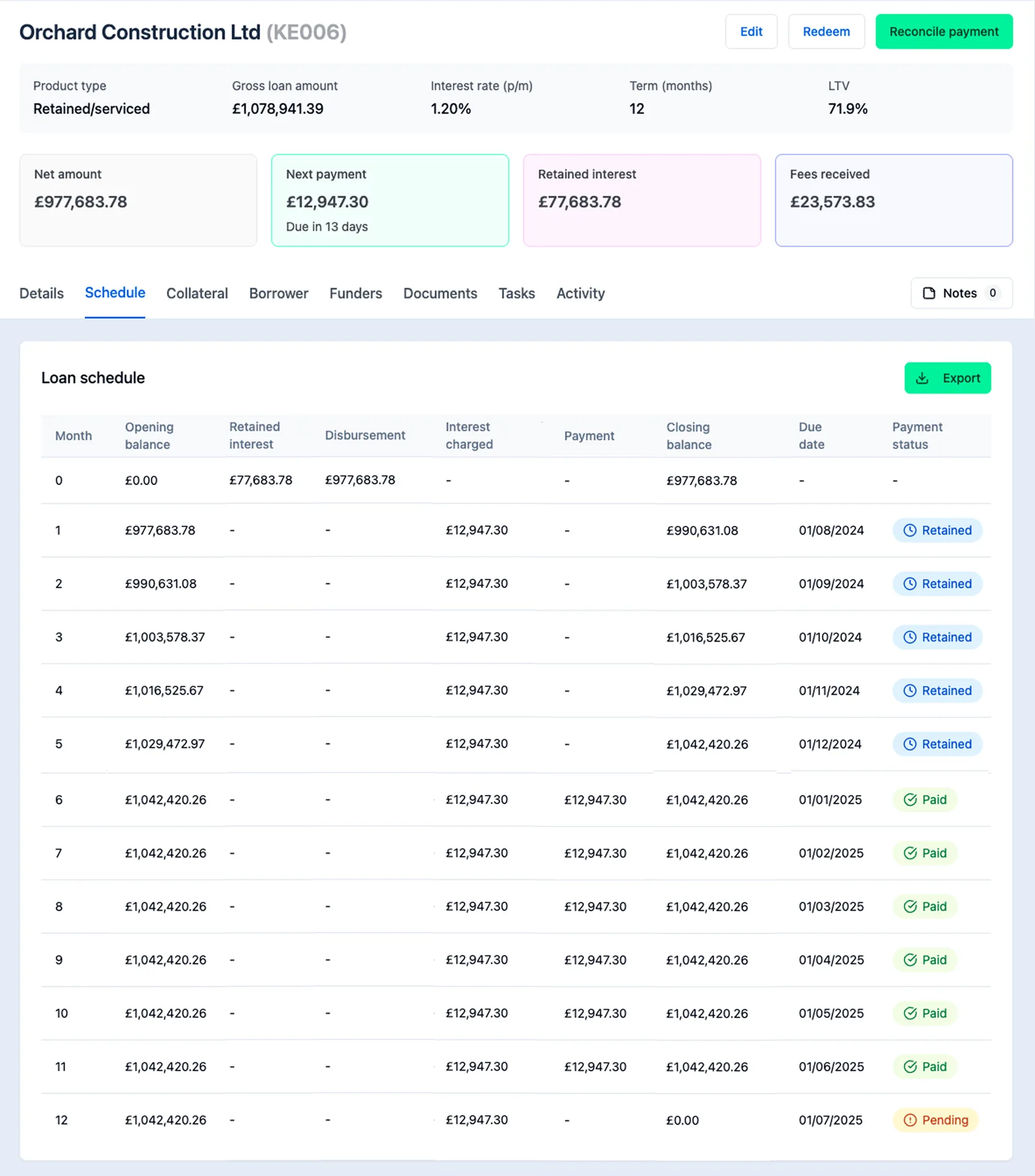
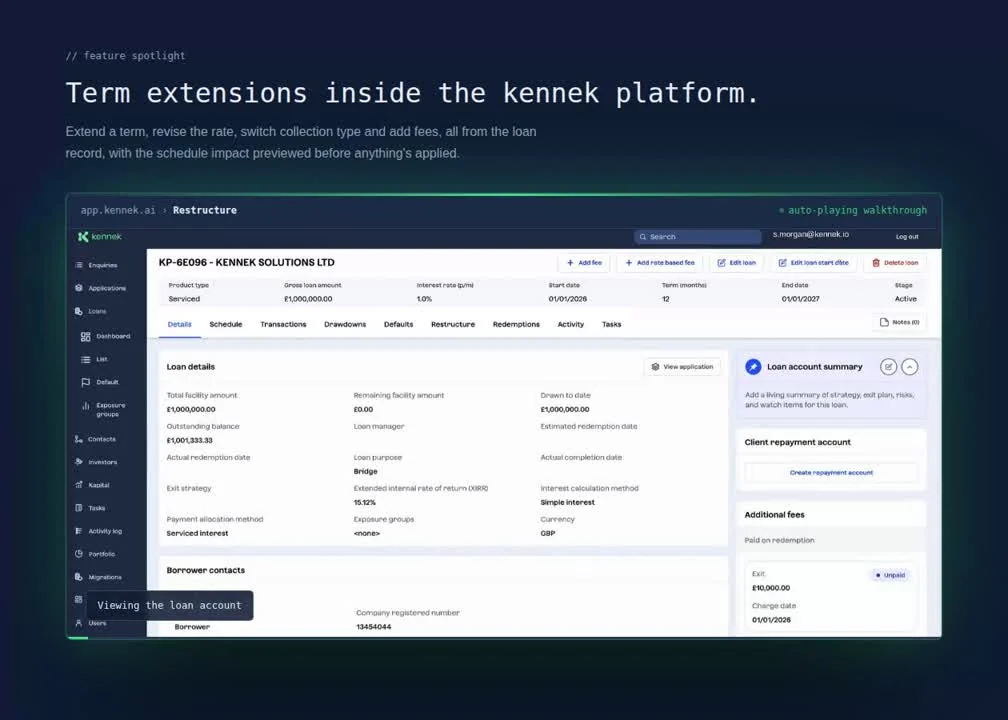
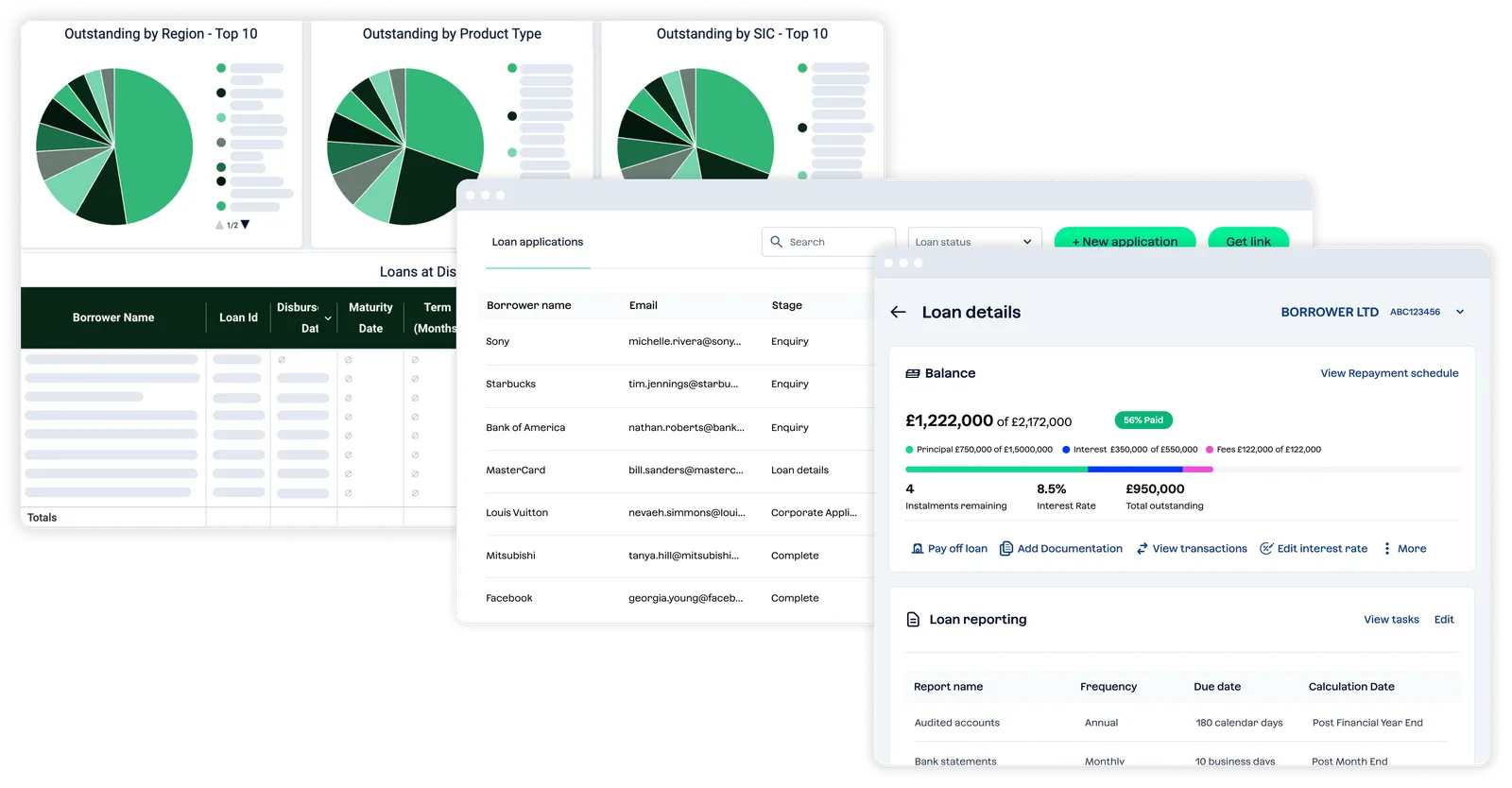
In today’s lending environment, relying on Excel spreadsheets and manual workflows is becoming increasingly inefficient. Traditional approaches often result in errors, slow operations, and difficulties in scaling. kennek’s all-in-one loan management platform provides a streamlined solution, covering the entire lending lifecycle—from origination and underwriting to loan servicing and investor reporting.
The Limitations of Manual Loan Management
Many lenders still rely on spreadsheets or manual processes for managing loan origination, servicing, and monitoring. While these tools may have worked previously, they come with several notable disadvantages:
- Data Fragmentation: Information is often scattered across multiple sheets and systems, making it challenging to obtain a unified view of loan portfolios.
- Increased Risk of Errors: Manual data entry and calculations are prone to human error, leading to inaccuracies and potential compliance issues.
- Operational Inefficiencies: Time-consuming manual workflows slow down approvals and servicing, lowering productivity.
- Compliance Challenges: Tracking regulatory requirements is harder without automated tools and reporting.
How kennek's Loan Management System Addresses These Challenges
kennek’s platform is designed to replace manual procedures with an integrated, automated solution:
- Centralized Data Management: All loan details are unified on a single platform, offering instant access and minimizing data dispersion.
- Automated Workflows: Repetitive tasks like payment alerts, covenant assessments, and reporting are automated, allowing staff to concentrate on more strategic activities.
- Enhanced Risk Monitoring: Sophisticated analytics and configurable risk metrics enable lenders to anticipate and address potential problems proactively.
- Improved Compliance: Integrated compliance features guarantee that all regulatory obligations are fulfilled, with automated reporting and audit tracking.
Real-World Impact
Lenders using kennek's platform have reported significant improvements:
- Reduced Processing Time:Up to a 60% reduction in loan processing times, allowing lenders to manage higher volumes without a corresponding rise in resources.
- Improved Accuracy: Reduced manual data entry mistakes and precise algorithmic computations enhance decision-making and lower risk.
- Cost Savings: Streamlined processes and reduced labor requirements lead to significant cost savings.
- Scalability: The platform’s adaptability enables lenders to expand operations efficiently, adjusting to changing demand.
Conclusion
Transitioning from manual processes and spreadsheets to kennek's Loan Management System is a crucial step for lenders aiming to enhance efficiency, reduce risk, and ensure compliance. By adopting a comprehensive LMS like kennek, financial institutions can modernize their operations and better serve their clients in an increasingly complex lending environment.
- Bridging finance
- Development finance
- Loan management
Written by
Xavier De Pauw, Co-founder & CFO
Co-founder and CFO of kennek. Previously co-founder and president of Fintech Belgium.
More from Xavier